Emulsifiers
Fatty Acid Ethoxylates: Structure, Grades and Applications
Fatty acid ethoxylates (FAEs) are produced by ethoxylating carboxylic acids rather than alcohols. The ester linkage gives distinct solubility, hydrolysis behaviour, lubricity, and emulsification profiles compared with fatty alcohol ethoxylates. Venus Ethoxyethers manufactures FAE grades from oleic, stearic, coconut, and tall oil fatty acids at custom EO levels from dedicated alkoxylation reactors in Goa, India — supplying textile spin finishes, metal working fluids, leather fatliquors, and cosmetic emulsifier systems globally.
On this page
- Structure and synthesis
- FAE vs fatty alcohol ethoxylate
- HLB and EO mole selection
- Applications in detail
- Selection guide by application
- Worked formulation examples
- Troubleshooting fatty acid ethoxylates
- PEG diesters, acid-value drift, and hydrolysis kinetics
- Manufacturing and quality at Venus
- Environmental and handling notes
- Regulatory and impurity considerations
Structure and synthesis
Fatty acid ethoxylates have the general structure RCOO–(CH₂CH₂O)n–H, where R is the fatty chain (C12–C18 typical) and n is the average EO mole number. Ethoxylation of fatty acids proceeds via base catalysis in pressurized reactors; the product is an ester of polyethylene glycol monoether with the fatty acid. The ester bond distinguishes FAEs from alcohol ethoxylates (RCO–(CH₂CH₂O)n–H), which carry a more hydrolytically stable ether linkage.
Common feedstocks include oleic acid (C18:1, liquid at room temperature), stearic acid (C18:0, waxy solid), coconut fatty acid (C12–C14 blend), and tall oil fatty acid (mixed C16–C18 unsaturated). EO levels from 4 to 30 moles tune HLB and water solubility similarly to alcohol ethoxylates, but the ester linkage is more sensitive to alkaline hydrolysis and elevated temperature than ether-linked products. Formulators must verify pH and temperature limits for each application.
Venus ethoxylates fatty acids on dedicated alkoxylation reactors with the same quality controls applied to alcohol ethoxylates: mole-ratio targeting, residual EO stripping, pH neutralization, and COA parameters including saponification value, acid value, cloud point, and residual ethylene oxide within specification.
FAE vs fatty alcohol ethoxylate
| Property | Fatty acid ethoxylate | Fatty alcohol ethoxylate |
|---|---|---|
| Linkage | Ester (–COO–) | Ether (–O–) |
| Alkaline stability | Lower — ester hydrolysis at high pH | Higher — ether bond stable |
| Acid stability | Moderate | Good |
| Lubricity | Often higher — ester film on metal | Moderate |
| Emulsification | Good for O/W at mid-high EO | Broader detergency range |
| Primary use | Emulsifiers, lubricants, fiber finishes | Detergents, general surfactants |
| Biodegradation | Good — ester cleavage initiates breakdown | Excellent for linear grades |
For alkaline cleaners above pH 11, fatty alcohol ethoxylates or alkali-stable surfactants are usually preferred. FAEs excel in neutral-to-mildly alkaline systems, oil emulsification, and applications where lubricity is valued. See the fatty alcohol ethoxylates guide for comparison with the broader FAE class.
HLB and EO mole selection
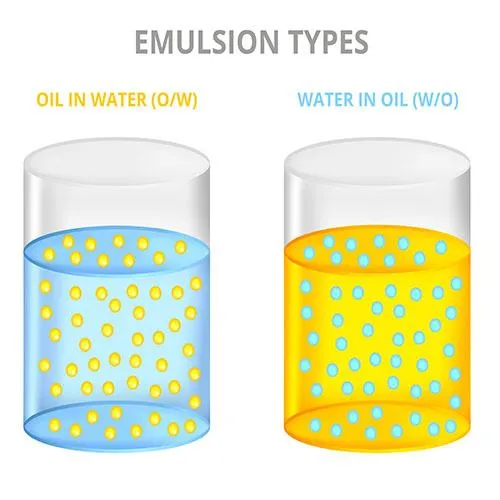
HLB (hydrophilic–lipophilic balance) governs emulsification behaviour. Low-EO FAEs (4–6 moles) are lipophilic — suitable for W/O emulsions and oil-phase lubricants. Mid-EO FAEs (8–15 moles) emulsify mineral oils, silicone oils, and esters in O/W systems. High-EO FAEs (15–30 moles) act as solubilizers and dispersants in aqueous media. Cloud point rises with EO content; formulators must ensure operating temperature stays below cloud point for solubility unless low-foam performance above cloud point is intentionally desired.
| EO moles (oleic base) | HLB (approx.) | Physical form | Typical use |
|---|---|---|---|
| 4–6 EO | ~8–10 | Liquid to soft paste | Metal lubrication, W/O emulsifier |
| 8–12 EO | ~11–13 | Liquid | Spin finish, O/W emulsifier |
| 12–15 EO | ~13–14 | Liquid to paste | Cosmetic emulsions, leather fatliquor |
| 15–30 EO | ~14–17 | Paste to solid | Solubilization, high-temp scour |
Pair FAE emulsifiers with co-emulsifiers per HLB scale guidance — a lipophilic FAE (8 EO) combined with a hydrophilic alcohol ethoxylate (15 EO) often delivers more stable emulsions than a single surfactant at intermediate HLB.
Applications in detail
Textile fiber lubricants: Oleic or stearic acid ethoxylates (8–15 EO) provide fiber-to-metal and fiber-to-fiber lubrication during spinning, drawing, and knitting without excessive foaming. The ester linkage contributes boundary lubrication on metal surfaces in spinning equipment. Typical use levels are 0.5–2% in spin finish emulsions. Venus FAE grades are compatible with antistatic agents and other spin finish components used in polyester and cotton processing. Explore textile chemicals for related products.
O/W emulsions (cosmetic and industrial): Mid-EO FAEs (10–15 moles) emulsify mineral oils, silicone oils, and esters in cosmetic creams, lotions, and industrial lubricant emulsions. Oleic acid ethoxylates remain liquid at ambient temperature, simplifying handling in cold climates. Stearic acid ethoxylates provide more body and structure to emulsion viscosity — useful in cream formulations where thickness is a sensory target.
Metal working fluids: FAEs contribute lubricity and emulsification in soluble oil and semi-synthetic coolants. Oleic acid ethoxylates at 5–10 EO are common in soluble oil packages. Alkaline stability limits must be verified for the operating pH — most soluble oils operate at pH 8–9.5 where FAEs remain stable; semi-synthetic systems at pH 9–10 may require accelerated stability testing. At pH above 11, switch to alcohol ethoxylates or sulfonates.
Leather fatliquors: Ethoxylated fatty acids soften leather by emulsifying natural fats and synthetic oils into the fiber structure. Tallow and oleic acid blends ethoxylated to 6–12 EO are standard in automotive and upholstery leather processing. The emulsifier must penetrate the wet-blue or crust leather and deposit lubricant uniformly without spotting.
Paper and pulp auxiliaries: FAEs appear as de-inking agents and softeners in certain paper grades, though alcohol ethoxylates dominate in pulp washing. Niche FAE applications leverage ester lubricity on calender rolls and coating equipment.
Selection guide by application
| Application | Acid base | EO moles | Use level |
|---|---|---|---|
| Spin finish lubricant | Oleic / C18 | 8–12 | 0.5–2% in finish emulsion |
| Cosmetic O/W emulsifier | Stearic / oleic | 10–15 | 2–5% in cream formula |
| Metal fluid emulsifier | Oleic | 5–10 | 3–8% in concentrate |
| Leather fatliquor | Tallow / oleic blend | 6–12 | 2–4% on wet leather weight |
| Silicone emulsification | Oleic | 8–10 | Pair with high-EO co-emulsifier |
Worked formulation examples
Polyester spin finish emulsion:
- 15% oleic acid, 10 EO (primary emulsifier/lubricant)
- 5% C16–18 alcohol, 15 EO (co-emulsifier)
- 3% antistatic agent
- Balance: demineralized water
- Dilute to 5–10% active in spin finish bath; pH 6–7
Soluble oil metal working fluid concentrate:
- 30% naphthenic base oil
- 15% oleic acid, 8 EO (emulsifier/lubricant)
- 10% sulfonate emulsifier (anionic co-emulsifier)
- 5% corrosion inhibitor
- Balance: base oil and additives
- Dilute 1:20 to 1:40 with water; target pH 8.5–9.0
Cosmetic O/W body lotion:
- 3% stearic acid, 12 EO (primary emulsifier)
- 2% cetyl alcohol (co-emulsifier/ thickener)
- 5% mineral oil (emollient)
- 0.5% preservative; balance: water phase
- Heat both phases to 75°C; emulsify with homogenization
Leather fatliquor:
- 4% tallow/oleic acid ethoxylate, 8 EO
- 2% sulfated fish oil (supplementary lubricant)
- Balance: water; pH 6.5–7.5
- Apply by drum or spray in wet-blue processing
Troubleshooting fatty acid ethoxylates
Ester-based ethoxylates hydrolyse in strong alkali and at high temperature. If a textile or leather bath goes hazy and loses wetting after a caustic step, the FAE ester may have cleaved — switch to a fatty alcohol ethoxylate for the alkaline step. Low-EO oleic grades are better emulsifiers; high-EO grades solubilize and wet. Do not treat them as 1:1.
| Issue | Cause | Move |
|---|---|---|
| Loss of activity in alkali | Ester hydrolysis | Use FAE alcohol ethoxylate in that step |
| Poor oil emulsification | EO too high | Drop to 5–9 EO on oleic/tallow acid |
| Colour darkening in tank | Heat + residual acid | Lower storage temperature; check acid value |
PEG diesters, acid-value drift, and hydrolysis kinetics
Ethoxylation of fatty acids does not produce a single monoester. Base-catalysed addition of EO to the carboxylic acid, together with transesterification, yields a mixture of polyethylene glycol monoester, PEG diester, and residual polyethylene glycol. Diester content lowers effective HLB, can cloud aqueous dilutions, and changes lubricity. Acid value on the COA tracks unreacted fatty acid; a rising acid value in stored bulk often signals hydrolysis or incomplete conversion rather than simple moisture pickup. Hydroxyl value and saponification value together describe whether the batch is EO-rich or ester-rich compared with the last qualified lot.
Hydrolysis of the ester linkage accelerates with pH, temperature, and water activity. At pH 9 and 40°C a spin-finish FAE may be acceptable for weeks; at pH 12 and 70°C in a degreaser the same molecule can split into soap and PEG within hours, shifting foam and emulsification. Kinetic checks — hold the diluted fluid at operating pH and assay acid value or residual acid — are more predictive than a single pH specification. If diester must be minimized, reaction temperature, catalyst, and a small excess of EO versus a soap-rich feed are the usual industrial levers, followed by stripping of residual EO to the agreed ppm limit.
Manufacturing and quality at Venus
Venus Ethoxyethers produces fatty acid ethoxylates in dedicated pressurized ethoxylation reactors alongside alcohol ethoxylates and propoxylates. Batch controls include mole-ratio targeting, residual EO stripping below regulatory limits, and pH neutralization. Quality parameters on every COA include saponification value, acid value, hydroxyl value, cloud point, pH, colour, and residual ethylene oxide.
Custom EO levels, acid feedstock blends, and pilot-through-commercial quantities are supported from Goa, India. Explore product pages for fatty acid ethoxylates and ethoxylated alcohols. For broader nonionic context, read nonionic surfactants. Request TDS and samples via Venus Ethoxyethers.
Environmental and handling notes
Fatty acid ethoxylates biodegrade through ester hydrolysis followed by fatty acid β-oxidation and polyoxyethylene chain breakdown. Natural acid feedstocks (coconut, oleic from vegetable sources) support sustainability claims in textile and leather markets. Store FAEs below 40°C to prevent ester hydrolysis in bulk tanks over extended periods; avoid prolonged exposure to strong alkali during formulation unless hydrolysis kinetics have been verified acceptable for the product shelf life target.
Regulatory and impurity considerations
Export markets increasingly specify limits on residual ethylene oxide, 1,4-dioxane, and diethylene glycol in ethoxylated products. Venus controls alkoxylation conditions and post-reaction stripping to meet customer and regulatory thresholds for textile, cosmetic, and metal fluid applications. Impurity profiles should be listed in registration dossiers when FAEs appear in formulated products sold into EU, US, or ASEAN markets. Request batch-specific COA data when building new product registrations or updating existing safety assessments.
Compared with alkylphenol ethoxylates, fatty acid ethoxylates offer favourable biodegradation profiles without alkylphenol metabolites. They are not direct drop-in replacements for APE in every application — HLB, foam, and alkaline stability differ — but FAEs serve as viable emulsifiers and lubricants in many reformulation projects targeting APE phase-out.