PEG & glycols
Humectants and Pearlizing Agents: PEG, Glycerin, and Glycol Distearate in Personal Care
Humectants and pearlizing agents shape the sensory signature of shampoos, body washes, lotions, and creams as much as primary surfactants and emulsifiers — drawing moisture into the stratum corneum, preventing dry-down tightness, and delivering the pearlescent optical effects consumers associate with premium rinse-off products. Polyethylene glycols (PEG), glycerin, and glycol esters including ethylene glycol distearate (EGDS) each occupy distinct roles: PEG as multifunctional humectant and solvent, glycerin as the gold-standard polyol humectant, and EGDS as the dominant pearlizing crystal former in opaque shampoos and shower gels. This guide explains selection by molecular weight, INCI labelling, formulation placement, and worked examples for shampoo and lotion bases. Venus Ethoxyethers manufactures cosmetic-grade PEG, humectant polyols, and pearlizing surfactants from facilities in India and the United States.
On this page
- Humectants in personal care: function and consumer perception
- Polyethylene glycol (PEG) humectants by molecular weight
- Glycerin: the reference humectant
- Combining PEG and glycerin in formulations
- Pearlizing agents: optics and mechanism
- Ethylene glycol distearate: formulation practice
- Worked example: pearlescent moisturizing shampoo
- Worked example: sulfate-free body wash with pearl
- Worked example: O/W body lotion with PEG and glycerin
- Worked example: hydrating facial toner / essence
- Humectants in hair care beyond shampoo
- Pearlizing without compromising mildness claims
- Regulatory, labelling, and stability considerations
- Choosing humectant and pearlizing suppliers
Humectants in personal care: function and consumer perception
Humectants are hygroscopic ingredients that attract and bind water — from the formulation itself, the surrounding air, and the upper layers of skin and hair. In rinse-off products, humectants reduce the stripping sensation that surfactants can cause by leaving a hydrated film on the skin and hair cuticle. In leave-on lotions and serums, humectants maintain moisture content in the epidermis, improve spreadability, and support the sensory profile of the product during and after application.
The humectant system is rarely a single ingredient. Formulators combine polyols at different molecular weights and hygroscopic strengths to balance immediate moisturization, long-wear hydration, and formulation stability (viscosity, preservation, compatibility with actives). PEG and glycerin are the most widely specified pair; propylene glycol, butylene glycol, and sodium PCA appear as co-humectants in premium and sensitive-skin lines.
Polyethylene glycol (PEG) humectants by molecular weight
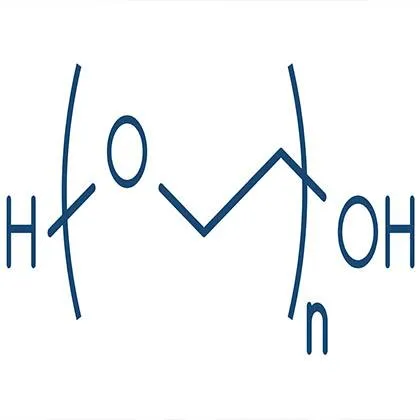
Polyethylene glycols are polymers of ethylene oxide with the general structure HO–(CH₂CH₂O)ₙ–H. Molecular weight — expressed as average number of EO units or nominal PEG number — determines physical form, hygroscopicity, and sensory character.
| PEG grade | Approx. MW | Physical form | Primary personal care role |
|---|---|---|---|
| PEG 200 | ~200 | Liquid | Solvent, light humectant, fragrance carrier |
| PEG 300–400 | ~300–400 | Liquid | Humectant, solubilizer for actives, toner base |
| PEG 600 | ~600 | Liquid / soft paste | Humectant, viscosity modifier in gels |
| PEG 1000–1500 | ~1000–1500 | Soft solid / paste | Humectant, emollient slip, stick products |
| PEG 4000–8000 | ~4000–8000 | Flakes / solid | Thickener, film-former, hair styling gels |
Lower molecular weight PEG (200–400) penetrates and hydrates quickly with a light, non-greasy feel — ideal for facial serums, micellar waters, and clear shampoos. Mid-range PEG (600–1500) balances humectancy with body and is common in body lotions and hair conditioners. High molecular weight PEG (4000+) primarily thickens and forms a water-retaining film rather than acting as a traditional small-molecule humectant.
Pharmaceutical and cosmetic monograph grades support export to regulated markets — see PEG in pharma formulations and PEG grades guide for specification detail. Peroxide and 1,4-dioxane limits should be confirmed for US and EU cosmetic registration.
Glycerin: the reference humectant
Glycerin (glycerol, propane-1,2,3-triol) remains the most widely used humectant in personal care by volume. Three hydroxyl groups give glycerin exceptional water-binding capacity — at 5–10% in lotions it is the primary moisture reservoir; at 2–5% in shampoos it reduces surfactant-induced dryness without significantly affecting foam.
Advantages of glycerin:
- Excellent safety profile and long history of cosmetic use
- Compatible with virtually all surfactant, emulsifier, and preservative systems
- Cost-effective at scale from oleochemical and petrochemical routes
- Supports "natural" and minimalist formulation positioning at appropriate concentration
Limitations include sticky skin feel above approximately 10% in leave-on products, and potential for microbial growth if preservation is inadequate in high-glycerin aqueous systems. PEG 400 at 2–5% can partially replace glycerin to reduce tackiness while maintaining humectant load — a common strategy in fast-absorbing body lotions.
Venus supplies glycerin and PEG through the humectants range alongside complementary polyols for complete formulation kits.
Combining PEG and glycerin in formulations
PEG and glycerin are synergistic rather than redundant. Glycerin provides strong, immediate hygroscopic binding; liquid PEG improves solubilization of actives, reduces glycerin tack at equal total humectant load, and can lower freeze-point of aqueous phases for cold-climate stability.
| Product type | Glycerin % | PEG grade / % | Notes |
|---|---|---|---|
| Clear shampoo | 1–3 | PEG 400 at 0.5–2% | Mildness; minimal foam impact |
| Body wash | 2–5 | PEG 200 at 1–3% | Fragrance solubilization bonus |
| Facial serum | 3–8 | PEG 400 at 2–5% | Active solvent + humectant |
| Body lotion (leave-on) | 3–8 | PEG 400 at 1–3% | Reduce tack; improve spread |
| Hair conditioner | 2–4 | PEG 600 at 1–2% | Cuticle hydration, slip |
Total humectant load above 15% in leave-on products requires careful preservation challenge testing and may affect emulsion stability if the oil phase is not adjusted.
Pearlizing agents: optics and mechanism
Pearlizing agents create the characteristic silky, opalescent appearance of premium shampoos, body washes, and hand soaps without adding colourant. The effect arises from crystalline platelets — typically ethylene glycol distearate (EGDS) or glycol stearate — dispersed in the surfactant matrix at dimensions that scatter light interference patterns.
Pearlizing is a physical optical effect, not a foam function. Pearlizing crystals can form in low-foam and high-foam systems alike. Crystal size, concentration, and cooling profile control pearl intensity from subtle satin to strong metallic pearl.
Common pearlizing chemistries:
- Ethylene glycol distearate (EGDS): Dominant pearlizer; INCI name on most opaque rinse-off products
- Glycol stearate (GMS-related): Softer pearl, some emulsification contribution
- Styrene/acrylate opacifiers: Synthetic latex particles for opacity without crystal pearl
- Titanium dioxide / mica: Colour cosmetics pearl; less common in mainstream shampoo
Venus supplies pearlizing agents through the pearlizing agents product range and ester chemistry portfolio at esters.
Ethylene glycol distearate: formulation practice
EGDS is added to shampoo and shower gel at 0.5–3% depending on desired pearl intensity. Critical processing rules:
- Cool-down addition: Add below 45–50°C to preserve crystal morphology; hot addition dissolves crystals and loses pearl
- Shear on cooling: Gentle stirring during cool-down promotes uniform platelet dispersion; excessive shear can break crystals
- Surfactant matrix: SLES–betaine and pearlizing shampoo blend systems support stable pearl; very high electrolyte may affect crystal growth
- Compatibility: Confirm pearl stability at 5°C and 40°C for 4 weeks before launch
EGDS can contribute slight viscosity build and body to the formula. Over-dosing above 3% may cause sedimentation of pearl crystals on storage — adjust concentration and cooling rate if bottom settling appears.
For emulsification contribution alongside pearl, glycol stearate and glycerol monostearate appear in lotions — see glycerol esters guide, personal care surfactants guide, and the dedicated pearlizing shampoo blend chassis (SLES, glycol distearate, cocamide MEA, CAPB, laureth-3/9).
Worked example: pearlescent moisturizing shampoo
| Component | % w/w | Function |
|---|---|---|
| SLES (C12–C14, 2 EO) | 10.0 | Primary anionic surfactant |
| Cocamidopropyl betaine | 3.0 | Co-surfactant, foam, mildness |
| Glycerin | 2.0 | Humectant — reduce dry feel |
| PEG 400 | 1.0 | Humectant, active solvent |
| Ethylene glycol distearate | 1.5 | Pearlizing agent |
| Citric acid / citrate | q.s. | pH 5.5–6.0 |
| NaCl | 0.5–1.5 | Viscosity adjustment |
| Preservative, fragrance | q.s. | — |
| Water | balance | — |
Heat water phase to 70°C with surfactants; dissolve glycerin and PEG. Cool to 42°C; add EGDS with gentle stirring. Continue cooling to 30°C; add preservative and fragrance. Target viscosity 2000–4000 cP. Pearl intensity develops over 24 hours as crystals equilibrate. For a full commercial chassis with cocamide MEA and laureth solubilizers, see pearlizing shampoo blend and the surfactant blends hub.
Worked example: sulfate-free body wash with pearl
- 8% sodium lauroyl methyl isethionate (SLMI) paste
- 4% cocamidopropyl betaine
- 3% glycerin; 1.5% PEG 200
- 1.2% ethylene glycol distearate (cool-down)
- 0.3% polysorbate 20 for fragrance solubilization
- pH 5.5–6.0; preservative, fragrance; water to 100%
Sulfate-free matrices pearl differently from SLES systems — validate EGDS concentration and cooling profile in pilot batch. Amphoteric-rich systems often pearl at slightly lower EGDS dose than SLES equivalents. See the mild syndet blend for CAPB, glycerin, glucoside, and taurate sulfate-free chassis.
Worked example: O/W body lotion with PEG and glycerin
| Component | % w/w | Function |
|---|---|---|
| Cetearyl alcohol + ceteth-20 | 3.0 | Emulsifier pair |
| Glycerol monostearate | 1.5 | Co-emulsifier, body |
| Caprylic/capric triglyceride | 8.0 | Emollient oil phase |
| Shea butter | 4.0 | Rich emollient |
| Glycerin | 5.0 | Primary humectant |
| PEG 400 | 2.0 | Co-humectant, reduce tack |
| Polysorbate 80 | 0.3 | Fragrance solubilizer |
| Preservative, fragrance, water | q.s. | — |
Heat oil and water phases separately to 75–80°C. Emulsify under homogenization; cool below 40°C before adding heat-sensitive actives. Viscosity builds on cooling as cetearyl alcohol crystallizes. Glycerin and PEG remain in the aqueous phase — confirm preservation efficacy at final pH.
Worked example: hydrating facial toner / essence
- 5% glycerin; 3% PEG 400; 2% butylene glycol
- 0.5% sodium hyaluronate (low MW)
- 0.3% polysorbate 20 + fragrance
- 0.1% disodium EDTA; preservative
- Water to 100%; pH 5.0–5.5
Clear aqueous systems with high humectant load demand robust preservation — challenge test at 20–25°C and 40°C. PEG 400 aids solubilization of fragrance and botanical extracts without clouding.
Humectants in hair care beyond shampoo
Conditioners, leave-in sprays, and hair masks use glycerin and PEG at higher levels than shampoo because the product remains on the hair shaft. Design rinse-off platforms with the hair conditioning chassis guide. PEG 600 and PEG 1000 add slip and detangling without the silicone build-up that some consumers avoid. In styling gels, PEG 4000–8000 provides hold and humidity resistance through film formation.
Protein-containing conditioners require humectant balance — excess glycerin in high-humidity climates can cause frizz by over-hydrating the hair shaft. Formulators in tropical export markets often reduce glycerin and increase PEG 400 or propylene glycol for lighter dry-down.
Pearlizing without compromising mildness claims
Pearlizing agents are generally non-irritating at typical use levels because they remain as insoluble crystals rather than micellar surfactant. EGDS does not contribute to cleansing — it is aesthetic only. Sensitive-skin and baby shampoos can include low levels of EGDS (0.5–1%) for visual premium positioning without affecting mildness testing outcomes from primary surfactant selection.
Brands marketing "sulfate-free" and "natural" often pair low-dose pearl with botanical extracts and glycerin-heavy humectant systems. Confirm that pearlizing agent INCI appears correctly on label — ethylene glycol distearate, not generic "pearlizing agent."
Regulatory, labelling, and stability considerations
INCI names must match supplier documentation: Glycerin, PEG-4 (for PEG 200), PEG-8 (PEG 400), etc., following CTFA nomenclature conventions. EU Cosmetics Regulation and FDA cosmetic labelling rules require descending order declaration above 1% concentration.
Microbial growth risk increases with humectant concentration — glycerin and low-MW PEG are not self-preserving. ISO 11930 and PCPC preservation challenge protocols apply. Pearlizing crystals can settle if density matching and viscosity are not optimized; 4-week stability at 5°C, 25°C, and 40°C is minimum before launch.
RSPO-certified glycerin from palm-derived routes supports sustainability claims. PEG from ethoxylation should meet customer limits on 1,4-dioxane and peroxide for EU and US retail.
Choosing humectant and pearlizing suppliers
Batch-to-batch colour and odour consistency in PEG and glycerin reduces reformulation rework. Pearlizing agent quality affects crystal size distribution — off-spec EGDS produces weak or grainy pearl. Dual sourcing from India and U.S. manufacturing supports supply resilience for multinational brand owners.
Explore the personal care application hub, personal care surfactant blends, cosmetic emulsifiers INCI guide, and polysorbate comparison for complementary formulation ingredients. Request samples of PEG, glycerin, and pearlizing agents via contact Venus Ethoxyethers.