Emulsifiers
Emulsifier Supplier Qualification Guide: Audits, COA Parameters and Technical Support
Nonionic emulsifiers — fatty alcohol ethoxylates, polysorbates, PEG esters, and specialty alkoxylates — are formulation-critical raw materials. A batch that drifts in ethoxylation degree, carries elevated ethylene oxide residues, or fails cloud point specification can collapse an emulsion, destabilize an agrochemical concentrate, or trigger a cosmetic recall. Qualifying an emulsifier supplier is therefore not a one-time price negotiation; it is a structured risk assessment covering manufacturing capability, analytical rigour, regulatory documentation, and post-award technical partnership. This guide provides a practical qualification framework for procurement, quality assurance, and R&D teams sourcing emulsifiers and surfactants from India and global markets, with reference to the quality systems Venus Ethoxyethers applies at its Goa alkoxylation facilities.
On this page
- Why emulsifier qualification matters
- Supplier qualification stages
- Supplier audit checklist
- COA parameters that define emulsifier quality
- Extended COA and impurity parameters
- ISO, GMP and application-specific quality systems
- Sample trials and application testing
- Technical support as a qualification criterion
- Documentation package for approved suppliers
- Red flags during supplier evaluation
- Venus Ethoxyethers quality assurance
Why emulsifier qualification matters
Emulsifiers function at interfaces. Small changes in hydrophilic–lipophilic balance (HLB), average ethylene oxide (EO) chain length, residual starting alcohol, or impurity profile alter interfacial tension, micelle structure, and phase behaviour in ways that generic COA parameters alone may not reveal until a formulation fails accelerated stability or field dilution tests.
Unlike commodity solvents, emulsifiers are performance chemicals whose identity is defined by a combination of chemical structure, molecular weight distribution, and physical properties — cloud point, hydroxyl value, saponification value, and pH of aqueous solution. Procurement teams accustomed to buying on specification sheets must extend qualification to the supplier's ethoxylation process control, raw material traceability, and ability to support deviation investigations when a batch underperforms in the customer's application.
Indian manufacturers such as Venus Ethoxyethers supply emulsifiers to agrochemical, homecare, personal care, textile, and industrial customers worldwide. Local production offers lead-time and cost advantages, but buyers in regulated markets still require evidence that offshore supply meets the same standards as domestic sources. A documented qualification program closes that gap before the first commercial shipment.
Supplier qualification stages
A robust emulsifier supplier qualification program typically proceeds through five stages. Skipping stages to accelerate sourcing invites costly reformulation later.
- Desktop review — company profile, manufacturing licences, ISO certificates, product range, pharmacopoeial or GMP status where relevant, and references from comparable applications
- Questionnaire and documentation audit — quality manual summary, change control policy, complaint handling, recall procedure, raw material qualification, and calibration programme
- On-site audit — manufacturing, QC laboratory, warehousing, EO handling, environmental and safety systems; optional for lower-risk industrial grades after desktop review
- Sample evaluation and application trials — laboratory and pilot-scale testing in the customer's formulation matrix
- Commercial approval and ongoing monitoring — approved supplier list entry, periodic re-qualification, and COA trend review
For pharmaceutical excipients and cosmetic ingredients subject to GMP or ISO 22716 expectations, stages two and three are mandatory regardless of application risk. For agrochemical emulsifiers and industrial detergents, risk-based qualification may accept a remote audit supplemented by third-party ISO 9001 certification — provided COA parameters and application trials are rigorous.
Supplier audit checklist
Use the following checklist as a starting template for on-site or remote supplier audits. Adapt depth to product risk and regulatory context.
| Audit area | Key questions | Evidence to request |
|---|---|---|
| Corporate and regulatory | Legal entity, export licences, environmental permits | Company registration, pollution control consent, factory licence |
| Quality management | ISO 9001 scope covers emulsifier manufacture? | Valid ISO certificate, quality manual index, management review records |
| Manufacturing | Batch records, reactor calibration, EO metering accuracy | Blank batch record, reactor qualification, EO feed system validation |
| Raw materials | Alcohol, EO, catalyst qualification and COA retention | Approved vendor list, incoming inspection SOPs |
| Process control | How is target EO mole ratio achieved and verified? | Process charts, in-process hydroxyl or cloud point checks |
| QC laboratory | Validated methods? Reference standards? | Method validation summaries, instrument calibration logs |
| Batch release | Who authorizes release? Deviation handling? | Release SOP, example COA, deviation and CAPA records |
| Storage and logistics | Temperature, segregation, container integrity | Warehouse SOP, MSDS availability, export packaging standards |
| Change control | Notification before process or site changes | Change control procedure, customer notification examples |
| Technical support | Formulation assistance, sample policy, R&D capability | Technical contact, sample lead times, pilot reactor availability |
Venus welcomes customer and third-party audits at its Goa manufacturing site. Our quality assurance team coordinates audit schedules, provides document packs in advance, and closes observations through CAPA tracking. See also emulsifier manufacturers in India for context on the domestic supply base.
COA parameters that define emulsifier quality
The certificate of analysis (COA) is the primary batch-level contract between supplier and buyer. For ethoxylated emulsifiers, certain parameters are non-negotiable because they directly map to HLB, solubility, and regulatory compliance.
Hydroxyl value (OH number) reflects the concentration of terminal hydroxyl groups and correlates with the degree of ethoxylation. For a given fatty alcohol backbone, lower hydroxyl value indicates higher average EO content and a more hydrophilic surfactant. Suppliers should report results with method reference (e.g. ASTM D1957, Ph. Eur. 2.5.25) and specification limits aligned to the product grade. Batch-to-batch drift beyond ±5% of target may shift HLB enough to affect emulsion stability.
Cloud point is the temperature at which a nonionic surfactant solution becomes turbid as the ethoxylate chain dehydrates. It is one of the most practical indicators of EO chain length for alcohol ethoxylates and is widely used in incoming inspection. Measure at stated concentration (typically 1% w/w in water) and note water hardness if applicable. Cloud point below specification can indicate under-ethoxylation; above specification may signal over-ethoxylation or alcohol blend variation.
pH of a 1% or 10% aqueous solution should fall within the agreed range. Elevated pH may indicate residual alkaline catalyst; low pH may signal acid-catalysed degradation or contamination. For personal care and pharma applications, pH limits are tighter and tied to skin compatibility or excipient monographs.
Colour (APHA / Hazen) is assessed on neat product or aqueous solution. High colour may indicate thermal degradation during ethoxylation, oxidized feedstock, or inadequate stripping. Cosmetic and pharma buyers often cap APHA at 50–100 depending on grade; industrial grades may allow higher limits.
Residual ethylene oxide (EO) is a critical safety and regulatory parameter. Ethylene oxide is a reactive alkylating agent classified as a carcinogen; ethoxylated products must be stripped to low ppm levels. Limits vary by application: cosmetic and pharma grades typically require single-digit to low tens of ppm; industrial grades may allow higher ceilings but are trending tighter under REACH and consumer pressure. Confirm method (headspace GC) and detection limit on the COA.
1,4-dioxane is a by-product formed when ethylene oxide cyclizes during ethoxylation of certain feedstocks. It is not a deliberate ingredient but appears in trace amounts in many ethoxylates. California Proposition 65, EU cosmetic regulation, and USP limits have driven industry-wide reduction programmes. Reputable suppliers monitor 1,4-dioxane by GC and can provide statements of compliance. Ask for typical and maximum batch results, not only pass/fail against an undisclosed limit.
Extended COA and impurity parameters
| Parameter | Why it matters | Typical method |
|---|---|---|
| Hydroxyl value (mg KOH/g) | Confirms EO degree; links to HLB | ASTM D1957, titration |
| Cloud point (°C) | Hydrophilicity index for nonionics | Visual / turbidimetric at 1% aq. |
| pH (1% or 10% solution) | Catalyst residue, stability | pH meter, USP / Ph. Eur. |
| Colour (APHA) | Degradation, feedstock quality | APHA Pt-Co scale |
| Residual EO (ppm) | Worker safety, regulatory | Headspace GC |
| 1,4-dioxane (ppm) | Cosmetic / Prop 65 compliance | GC-MS |
| Water content (%) | Active matter, storage stability | Karl Fischer |
| Peroxide value | Oxidation during storage | Iodometric titration |
| Free alcohol / PEG content | Unreacted feedstock, odour | GC or titration |
| Active matter (%) | Commercial dosing accuracy | Calculation from water + impurities |
Request a specification sheet alongside the COA template before qualification. Compare supplier limits to your internal incoming QC criteria. For dual-sourced emulsifiers, harmonize specifications so formulation teams can switch lots without revalidation — a practice Venus supports through consistent process control across campaigns.
ISO, GMP and application-specific quality systems
ISO 9001 certification demonstrates a documented quality management system covering design, production, and delivery. Verify that the certificate scope explicitly includes alkoxylation or surfactant manufacture at the site that will supply your material — not only trading or repackaging operations.
ISO 14001 and ISO 45001 address environmental and occupational health systems. Ethoxylation uses pressurized ethylene oxide; buyers increasingly audit EO storage, scrubbing, and emergency response as part of ESG due diligence.
GMP alignment is required when emulsifiers enter pharmaceutical or food-contact supply chains. Venus subsidiary Avesta Pharma manufactures pharmacopoeial-grade materials under GMP-aligned systems. Industrial emulsifiers from Venus Ethoxyethers are produced under ISO 9001 with batch traceability suitable for cosmetic and technical applications; grade selection must match the intended regulatory tier.
ISO 22716 (cosmetics GMP) applies to cosmetic ingredient manufacturers in many markets. Emulsifier suppliers serving EU and UK cosmetic customers should demonstrate hygiene, contamination control, and batch documentation consistent with ISO 22716 expectations even when certification is not formally held.
For agrochemical emulsifiers, compliance with REACH registration or import equivalence, and provision of SDS in GHS format, is part of qualification for European buyers. Indian exporters should supply LOA documentation or EU REACH registration numbers where applicable.
Sample trials and application testing
Paper qualification cannot replace application performance. Structure sample trials in phases:
Phase 1 — Analytical verification: Receive development samples from at least two production lots if possible. Confirm hydroxyl value, cloud point, pH, colour, EO residues, and 1,4-dioxane against specification. Compare to incumbent supplier baseline.
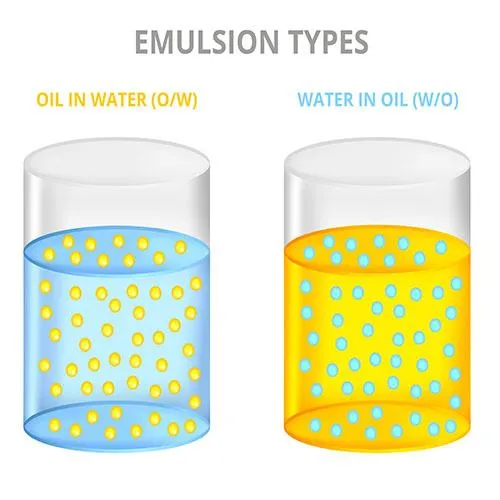
Phase 2 — Laboratory formulation: Test the emulsifier in a model formulation representative of commercial product — O/W lotion, agrochemical EC dilution, detergent liquor, or other relevant matrix. Evaluate emulsion droplet size, viscosity, and appearance at Day 0, and accelerated stability at elevated temperature.
Phase 3 — Pilot or plant batch: Scale up to pilot reactor or single production batch before dual-sourcing at full volume. Monitor whether process shear, temperature profile, or addition order at scale affects emulsifier performance.
Phase 4 — Field or consumer test (where applicable): Agrochemical emulsifiers require CIPAC dilution stability and cold test; personal care products may need freeze–thaw and centrifuge separation protocols.
Venus provides emulsifier samples through its custom synthesis and sampling services, with technical guidance on HLB matching and co-emulsifier pairing. Explore product families on emulsification and emulsifiers and co-surfactants for personal care systems.
Technical support as a qualification criterion
The best emulsifier suppliers function as extension of the customer's R&D team. Evaluate technical support on:
- Response time to formulation queries and failure investigations
- Ability to suggest alternative EO levels or alcohol chain lengths when stability fails
- Access to pilot-scale ethoxylation for custom mole ratios
- Documentation support for regulatory submissions — composition statements, allergen declarations, vegan and palm policies
- Stability of technical contacts across years — account managers who understand your product line
Venus Ethoxyethers operates 24/7 R&D with pilot alkoxylation reactors at Goa, enabling custom EO degrees before full-scale production. This capability is particularly valuable when qualifying a supplier for a new active ingredient in agrochemical ECs or a reformulated cosmetic emulsion where off-the-shelf HLB does not fit.
Documentation package for approved suppliers
Upon qualification, archive a master file containing:
- Executed quality agreement or supply agreement with change-notification clauses
- Current specification sheet and COA template for each approved grade
- MSDS / SDS and, where relevant, allergen and impurity statements
- ISO certificates and audit reports
- Sample trial reports and approved formulation references
- Approved manufacturer declaration for regulatory dossiers (cosmetic PIF, agrochemical annex, pharma DMF cross-reference)
Re-qualify annually or after any supplier change notification affecting process, site, specification, or raw material source. Trend COA data for hydroxyl value and cloud point — gradual drift may precede visible formulation failure.
Red flags during supplier evaluation
Walk away or escalate due diligence when:
- Supplier refuses site audit or laboratory tour without credible alternative assurance
- COA lacks method references or reports "complies" without numerical results
- Residual EO or 1,4-dioxane not tested or reported as "not detected" without LOD
- Cloud point or hydroxyl value missing for a nonionic emulsifier where these define the grade
- Specification changes between sample lot and commercial lot without notification
- No documented change control or deviation management
Price advantage alone does not compensate for a failed agrochemical tender, cosmetic compliance action, or production batch rejection.
Venus Ethoxyethers quality assurance
Venus manufactures nonionic emulsifiers, fatty alcohol ethoxylates, polysorbates, PEG derivatives, and specialty alkoxylates from dedicated pressurized reactors in Goa, India. Our quality systems integrate:
- ISO 9001-certified manufacturing with batch traceability from alcohol and EO receipt through release
- In-house QC laboratories testing hydroxyl value, cloud point, pH, colour, moisture, active matter, residual EO, and application-directed impurities
- Validated stripping processes to minimize residual EO and 1,4-dioxane in cosmetic- and pharma-directed grades
- Customer audit support, quality agreements, and COA customization for multinational specifications
- Technical service for emulsifier selection across agrochemical, personal care, and homecare applications
For surfactant sourcing context beyond emulsifiers, see surfactant manufacturer India guide and manufacturing infrastructure. Contact Venus via reach us to schedule a qualification audit, request documentation packs, or begin sample trials.