Emulsifiers
OPE vs NPE: Octylphenol vs Nonylphenol Ethoxylate Comparison Guide
Octylphenol ethoxylates (OPE) and nonylphenol ethoxylates (NPE) are the two dominant alkylphenol ethoxylate (APE) families in industrial surfactant chemistry. Both are produced by ethoxylating alkylphenols with ethylene oxide, both biodegrade to persistent, estrogenic alkylphenol metabolites, and both face tightening regulatory scrutiny — yet their molecular structures, HLB profiles, cloud points, and application niches differ enough that formulators cannot treat them as interchangeable. This guide compares OPE and NPE chemistry, performance tables, industrial applications, regulatory status, and APE-free replacement strategies for manufacturers sourcing from or reformulating with Venus Ethoxyethers in Goa, India.
On this page
- What are OPE and NPE?
- Molecular structure comparison
- HLB comparison: OPE vs NPE grades
- Cloud point comparison table
- Performance differences in practice
- Industrial applications: where OPE and NPE are specified
- Regulatory landscape: OPE and NPE compared
- APE-free alternatives: replacing OPE and NPE
- Reformulation workflow: OPE or NPE exit
- Cost and sourcing from Venus Ethoxyethers India
What are OPE and NPE?
Alkylphenol ethoxylates are nonionic surfactants formed by reacting an alkylphenol — phenol substituted with a branched alkyl chain — with ethylene oxide (EO). The alkyl group determines whether the product is classified as octylphenol ethoxylate (OPE) or nonylphenol ethoxylate (NPE).
Octylphenol ethoxylates (OPE) are based on octylphenol, typically 4-tert-octylphenol with an eight-carbon branched alkyl substituent on the phenol ring. Commercial grades are designated OP-4, OP-7, OP-10, OP-30, and similar, where the number indicates approximate moles of ethylene oxide per mole of octylphenol. Commercial OPE grades include octylphenol ethoxylate (OP) series surfactants.
Nonylphenol ethoxylates (NPE) are based on nonylphenol, typically 4-nonylphenol with a nine-carbon branched alkyl chain. Grades are designated NP-4, NP-6, NP-9, NP-10, NP-15, NP-20, and higher. NPE historically dominated global APE consumption as commercial nonylphenol ethoxylate (NPE) grades.
Both families share the polyoxyethylene hydrophilic chain and the alkylphenol hydrophobe. The one-carbon difference in alkyl chain length shifts lipophilicity, HLB, cloud point, and emulsification selectivity — differences that matter in formulation matching and in APE-free replacement.
Product hubs: octylphenol ethoxylates | nonylphenol ethoxylates | alkyl phenol ethoxylates overview.
Molecular structure comparison
The structural difference between OPE and NPE is confined to the alkyl substituent on the para position of the phenol ring:
- OPE hydrophobe: C8 branched alkyl (4-tert-octylphenol) — slightly shorter, marginally less lipophilic than nonylphenol
- NPE hydrophobe: C9 branched alkyl (4-nonylphenol) — longer alkyl arm, stronger interaction with mineral oil, waxes, and hydrophobic soils
- EO chain: Identical chemistry — polyoxyethylene units added in random or narrow-range distributions depending on catalyst and process
- Degradation product: OPE yields octylphenol; NPE yields nonylphenol — both are alkylphenols with endocrine-disrupting activity in aquatic organisms
At equivalent EO mole count, NPE is slightly more hydrophobic than OPE because the nonyl chain adds one carbon of lipophilic character. This shifts cloud point downward and HLB downward by approximately 0.5–1 unit compared to the corresponding OPE grade. Formulators switching between OPE and NPE at the same mole number will observe measurable differences in solubility, foam, and emulsification behaviour.
HLB comparison: OPE vs NPE grades
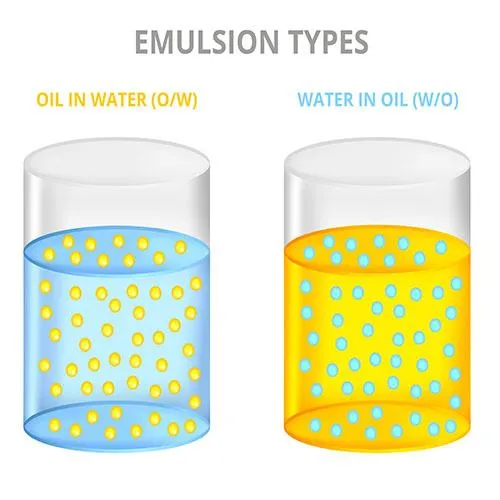
Hydrophile–lipophile balance (HLB) governs whether a surfactant favours oil-in-water or water-in-oil emulsification and predicts solubility in aqueous systems. The table below compares approximate HLB values for equivalent EO mole grades.
| Grade | Approx. EO moles | HLB (OPE) | HLB (NPE) | Typical form at 25°C |
|---|---|---|---|---|
| OP-4 / NP-4 | 4 | 8.0–8.5 | 8.5–9.0 | Oil-soluble liquid |
| OP-7 / NP-6 | 6–7 | 10.5–11.5 | 11.0–12.0 | Cloudy liquid / dispersible |
| OP-10 / NP-9 | 9–10 | 12.5–13.5 | 13.0–14.0 | Water-dispersible liquid |
| OP-15 / NP-10 | 10–15 | 14.0–15.0 | 14.5–15.5 | Water-soluble liquid |
| OP-30 / NP-15 | 15–20 | 16.0–17.0 | 16.5–17.5 | Water-soluble paste/liquid |
| OP-45 / NP-30 | 30–45 | 17.5–18.5 | 18.0–19.0 | Water-soluble solid/paste |
NPE grades at the same EO mole count sit 0.5–1 HLB unit higher than OPE because the longer nonyl chain contributes more lipophilic character, requiring additional EO to achieve equivalent water solubility. When replacing NP-9 with OP-10, do not assume a one-to-one swap — match HLB and cloud point, not mole count alone.
For broader HLB context, see HLB scale guide and APE comparison guide covering NPE, OPE, card phenol, and styrenated phenol ethoxylates.
Cloud point comparison table
Cloud point is the temperature at which a 1% aqueous solution of a nonionic surfactant becomes turbid as the surfactant loses water solubility. It is a critical parameter for textile processing, hot alkaline cleaning, and any application where operating temperature approaches or exceeds the surfactant cloud point.
| Grade | Cloud point OPE (°C, 1% aq.) | Cloud point NPE (°C, 1% aq.) | Interpretation |
|---|---|---|---|
| 4 EO | Insoluble / oil phase | Insoluble / oil phase | Degreasing, W/O emulsification |
| 6–7 EO | 25–35 | 30–40 | Scouring, semi-soluble emulsifiers |
| 9–10 EO | 55–65 | 50–58 | Textile wetting, hard-surface cleaning |
| 12–15 EO | 80–95 | 75–88 | High-temperature scouring, latex stabilizer |
| 20+ EO | >100 | >100 | Solubilizer, emulsion polymerization |
OPE mid-mole grades (OP-7, OP-10) typically cloud 3–8°C higher than equivalent NPE grades because the shorter octyl chain requires less thermal energy to desolvate the EO chain. In textile jet machines operating at 95–98°C, this difference can determine whether a surfactant remains soluble or precipitates onto fabric. Always confirm cloud point in the actual electrolyte matrix — salt and alkali shift cloud point downward for both families.
Detailed cloud point methodology: cloud point surfactants guide.
Performance differences in practice
Emulsification and detergency: NPE generally emulsifies mineral oil, machining fluids, and fatty soils more aggressively than OPE at equivalent EO level. NP-9 became the global benchmark for industrial degreasing and textile scouring. OPE is preferred where slightly lower foam, finer emulsion droplet size, or compatibility with specific resin systems is required — common in emulsion polymerization and certain coating formulations.
Wetting speed: On cotton and polyester blends, NP-9 and NP-10 historically set the wetting benchmark. OP-10 wets comparably on many substrates but may require 10–20% higher dose to match capillary rise on tightly woven greige fabric. In practice, mills standardized on one APE family decades ago and reformulation requires side-by-side fabric trials, not datasheet comparison alone.
Foam profile: OPE tends to produce slightly lower foam than NPE at equivalent use concentration and HLB. This matters in spray washers, metal cleaning machines with air spargers, and high-agitation textile jets where foam overflow stops production.
Electrolyte tolerance: Both OPE and NPE tolerate builders, caustic, and moderate salt better than many fatty alcohol ethoxylates. NPE retains solubility in more aggressive alkaline liquor — a reason NP-15 and NP-20 persist in emulsion polymerization and high-electrolyte cleaners.
Colour and odour: Both APE families are pale yellow liquids with faint phenolic odour at standard grades. High-purity narrow-range grades reduce colour for applications sensitive to product appearance.
Industrial applications: where OPE and NPE are specified
| Application | Preferred APE | Typical grade | Why this family |
|---|---|---|---|
| Textile scouring and wetting | NPE | NP-9, NP-10 | Cost, wetting benchmark, electrolyte tolerance |
| Industrial degreasing | NPE | NP-4, NP-6, NP-9 | Mineral oil emulsification |
| Emulsion polymerization | Both; OPE in acrylics | NP-15–30; OP-30 | Particle size control, latex stability |
| Agrochemical EC emulsifiers | NPE (legacy) | NP-6, NP-9 | Emulsifier package with Ca-DDBS |
| Paints and coatings latex | OPE | OP-10, OP-30 | Finer particle size, lower foam |
| Paper deinking | NPE | NP-9, NP-10 | Ink dispersion, froth flotation |
| Leather degreasing | NPE | NP-9 | Natural fat emulsification in beamhouse |
| Institutional cleaning | NPE | NP-9, NP-10 | Cost per unit detergency |
| Metal working fluids | OPE | OP-7, OP-10 | Lower foam, emulsion stability |
For the ten largest APE application sectors, see top 10 APE uses. For agrochemical emulsifier design without APE, see agrochemical formulation guide.
Regulatory landscape: OPE and NPE compared
Both OPE and NPE face regulatory restriction because their biodegradation pathway yields alkylphenols — octylphenol and nonylphenol respectively — that are persistent, bioaccumulative, and toxic to aquatic life. Nonylphenol is the more extensively studied and restricted of the two degradation products.
EU REACH (Annex XVII): Restricts nonylphenol and NPE above 0.1% in intentional formulations for most industrial and consumer uses. Textile articles washable in water may not contain NPE above 0.01% from February 2021. Octylphenol and OPE are subject to separate REACH restriction entries with comparable intent — intentional use in consumer and many industrial formulations is effectively banned in the EU.
US EPA: Nonylphenol and NPE underwent TSCA risk evaluation; major brands voluntarily phased out NPE from consumer detergents since the 2000s. Octylphenol is listed on the TSCA Work Plan for chemical assessment. Industrial users must confirm state-level requirements (e.g. California Proposition 65 listings).
Canada, Japan, Australia: NPE listed as toxic or priority substance; OPE subject to similar scrutiny. Brand-owner restricted substance lists (ZDHC, Bluesign, Oeko-Tex) increasingly ban both NPE and OPE in textile supply chains globally — not only in EU-origin goods.
Practical implication: Export goods manufactured in India for EU, US, or brand-compliant markets must document APE-free status. Legacy domestic industrial applications may still legally use APE where local regulation permits, but global supply chain pressure is accelerating reformulation for both OPE and NPE.
APE-free alternatives: replacing OPE and NPE
No single surfactant replaces all OPE and NPE grades. Replacement strategy depends on incumbent grade, application, and performance specification. Venus Ethoxyethers manufactures APE-free alternatives from the same ethoxylation platform used for legacy APE supply.
| Incumbent APE | APE-free replacement | Match parameter |
|---|---|---|
| NP-4 / OP-4 | C13 alcohol, 3 EO or C9–C11, 3 EO | HLB 8–9, cloud point, degreasing |
| NP-6 / OP-7 | C13, 5 EO or methyl ester ethoxylate 5 EO | Scouring, semi-soluble emulsification |
| NP-9 / OP-10 | C13, 7–9 EO or C9–C11, 7 EO | Most common replacement target |
| NP-10 / OP-15 | C12–14, 9–10 EO or C16–18, 10 EO | Textile detergent, hard-surface cleaning |
| NP-15 / OP-30 | C16–18, 15–20 EO or styrenated phenol ethoxylate | Emulsion polymerization, high electrolyte |
| NP-20+ / OP-45 | C16–18, 25–30 EO; polymeric surfactants | Latex stabilizer, solubilizer |
Fatty alcohol ethoxylates (FAE) are the default replacement in detergents, textile auxiliaries, and institutional cleaners. Linear C12–C15 and branched C9–C11 oxo alcohol ethoxylates provide readily biodegradable surfactants with tunable HLB. See fatty alcohol ethoxylates and NPE alternatives guide.
Methyl ester ethoxylates (MEE) replace APE where low foam is critical — metal cleaning, spray washers, textile jet machines. MEE at 5–7 EO replaces NP-6 to NP-9 with lower foam than equivalent FAE.
Narrow-range ethoxylates (NRE) offer sharper cloud points and more predictable HLB, easing one-to-one APE replacement in demanding formulations.
Styrenated phenol ethoxylates (SPE) replace high-mole APE in emulsion polymerization where APE is prohibited but phenolic hydrophobe performance is still required — without alkylphenol degradation products.
Reformulation workflow: OPE or NPE exit
- Inventory incumbent grade — OPE or NPE, mole count, active concentration, application, and performance specification
- Map HLB and cloud point — request TDS for candidate FAE, MEE, or NRE grades; note that NPE-to-FAE matching uses HLB, not mole count
- Lab screening — detergency, foam height, wetting time, emulsion stability at 24 h and 40°C
- System compatibility — test with builders, enzymes, solvents, and co-surfactants in full formula
- Application trial — mill, washer, polymerization reactor, or field scale
- Regulatory sign-off — update SDS, labels, and customer APE-free declarations
Venus supports side-by-side testing with APE-free alternatives from Goa, India, with documented biodegradability (OECD 301), REACH registration status, and APE-free supplier declarations for export dossiers.
Cost and sourcing from Venus Ethoxyethers India
NPE historically offered the lowest cost per unit HLB in many Asian and Middle Eastern markets. OPE commanded a premium in polymerization and low-foam applications. APE-free FAE and MEE may carry higher raw material cost — offset by market access to regulated customers, avoidance of effluent surcharges for alkylphenol residues, and elimination of reformulation risk under tightening regulation.
Venus Ethoxyethers manufactures both legacy APE grades (where legally supplied) and APE-free alternatives from dedicated ethoxylation reactors in Goa, India. Indian textile mills, detergent blenders, polymer producers, and agrochemical formulators benefit from local supply, custom EO mole counts, and technical support for OPE-to-FAE and NPE-to-FAE matching. Explore textile chemicals, homecare surfactants, and contact Venus for samples and reformulation support.