PEG & glycols
Pharma-Grade PEG Sourcing from India: USP Grades, Documentation and Supplier Qualification
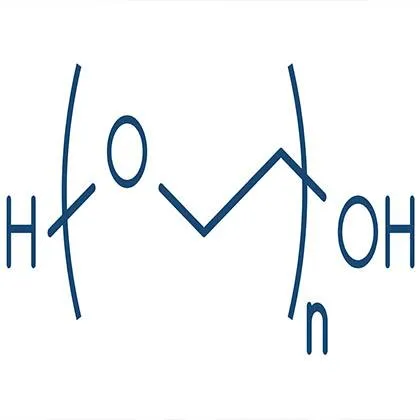
Polyethylene glycol (PEG, CAS 25322-68-3) is among the most frequently specified pharmaceutical excipients worldwide — solvent, binder, plasticizer, ointment base, laxative active, and suppository matrix. Indian manufacturers now supply pharmacopoeial macrogol at scale with documentation packages comparable to Western sources, but procurement teams must still verify monograph compliance, impurity profiles, stability data, and DMF cross-references before approving a new supplier. This guide explains how to source pharma-grade PEG grades 400 through 8000 from India: USP and Ph. Eur. requirements, excipient monographs, impurity limits, stability considerations, documentation expectations, and the manufacturing capability Venus Ethoxyethers and subsidiary Avesta Pharma provide from Goa.
On this page
- Why India for pharma-grade PEG?
- USP, Ph. Eur. and pharmacopoeial PEG grades
- Pharma PEG grades 400–8000: applications overview
- Excipient monograph compliance: what to verify
- Impurity limits and patient safety
- Stability of pharma-grade PEG
- DMF, documentation and regulatory packages
- Supplier qualification checklist for pharma PEG
- PEG 400–8000: grade selection for formulators
- Manufacturing at Venus Goa: process and quality
- Logistics, packaging and import considerations
- Working with Venus and Avesta Pharma
Why India for pharma-grade PEG?
India is the world's largest supplier of generic finished dosage forms and a major producer of pharmaceutical excipients. Domestic PEG manufacturing eliminates long ocean freight lead times, reduces import duty exposure for Indian formulators, and gives multinational companies a second-source option for supply-chain resilience.
Ethoxylation — the core process for PEG production — is well established in India, with pressurized ethylene oxide handling, integrated QC laboratories, and export documentation experience built over decades. The qualification question is not whether India can manufacture PEG, but whether a specific supplier's grade, documentation, and change-control systems meet your regulatory filing requirements.
Venus Ethoxyethers manufactures polyethylene glycol from dedicated alkoxylation plants in Goa, while subsidiary Avesta Pharma supplies pharmacopoeial macrogol to regulated markets including the United States, Europe, and Canada. The same ethoxylation expertise underpins both industrial and pharma product lines; grade purity, validation depth, and documentation differentiate pharma supply.
USP, Ph. Eur. and pharmacopoeial PEG grades
In pharmacopoeias, polyethylene glycol is named macrogol (Ph. Eur., IP) or polyethylene glycol (USP). Each monograph covers a defined molecular weight fraction — Macrogol 400, Macrogol 4000, Macrogol 8000, and so on. All grades share CAS 25322-68-3; identity is confirmed by molecular weight range, infrared spectroscopy, and chemical tests specified in the monograph.
Pharma-grade PEG is not a single product. Liquid grades (PEG 300, 400, 600) serve as solvents and co-solvents for oral solutions, topical gels, and parenteral formulations where monographs permit. Semi-solid grades (PEG 1500, 3350) appear in ointments and osmotic laxative powders. Solid grades (PEG 4000, 6000, 8000) function as tablet binders, film-coating plasticizers, and suppository bases.
Procurement must match monograph name and number to the intended use. Using Macrogol 4000 where Macrogol 8000 is filed in a drug master file creates a regulatory mismatch even though both are "PEG." See PEG grades guide for molecular weight and physical form comparison across the full range.
Pharma PEG grades 400–8000: applications overview
| Grade | Physical form | Primary pharma uses | Key monograph tests |
|---|---|---|---|
| PEG 300 | Liquid | Parenteral co-solvent, topical vehicle (where monograph allows) | MW, viscosity, acidity, water |
| PEG 400 | Liquid | Oral solution solvent, soft gel fill, topical gel humectant | MW, hydroxyl value, pH, glycols |
| PEG 600 | Liquid / semi-solid | Ointment component, suppository blend | MW, melting behaviour |
| PEG 1500 | Semi-solid | Topical base, suppository blend with lower-MW PEG | MW, congealing range |
| PEG 3350 | Solid powder | Osmotic laxative active (macrogol 3350) | Tight MW distribution, low oligomers |
| PEG 4000 | Flake / powder | Tablet binder, coating plasticizer, suppository | MW, melting range, acidity |
| PEG 6000 | Flake / powder | Binder, sustained-release matrix, coating | MW, congealing point |
| PEG 8000 | Flake / powder | Film coating plasticizer, capsule lubricant, binder | MW, congealing point, impurities |
PEG 3350 as a laxative active demands tighter control of low-molecular-weight oligomers than general excipient grades. PEG 8000 is the most widely qualified high-MW grade for oral solid dosage forms. Liquid PEG 400 is the workhorse solvent for poorly water-soluble APIs in oral and topical development.
Detailed stability and formulation behaviour: PEG in pharmaceutical formulations. High-MW solid grades: high molecular weight PEG guide.
Excipient monograph compliance: what to verify
When qualifying an Indian PEG supplier, request evidence of compliance against each test in the applicable monograph. Core monograph categories include:
Identification — IR spectrum match to reference; chemical identity confirmation.
Average molecular weight — calculated from hydroxyl value or measured by GPC where monograph specifies. MW must fall within stated range (e.g. 760–880 g/mol for Macrogol 400).
Acidity / alkalinity — acid value or pH of solution within limit; indicates neutralization completeness after ethoxylation.
Water content — Karl Fischer result below monograph maximum; critical for solid grades used as binders.
Freezing range / congealing point — for solid and semi-solid grades; confirms MW distribution.
Ethylene glycol and diethylene glycol — limits on unreacted or cleaved glycol impurities; especially important for oral and parenteral grades.
1,4-dioxane — USP and Ph. Eur. specify limits for macrogol grades; confirm supplier test method and batch data.
Residual ethylene oxide — alkylating agent stripped to low ppm; workplace and product safety parameter.
Heavy metals and redox impurities — per monograph and ICH Q3D elemental impurity expectations where applicable.
The COA must state the pharmacopoeia edition (e.g. USP-NF current, Ph. Eur. 11.x) and show numerical results, not merely "complies."
Impurity limits and patient safety
PEG is generally regarded as safe when grade matches route of administration and dose, but impurity profile matters — particularly for chronic-use laxatives, high-PEG-load topical products, and parenteral formulations.
| Impurity | Source | Why it is controlled |
|---|---|---|
| Ethylene glycol | Unreacted feedstock, degradation | Toxicity at elevated levels; oral exposure limit |
| Diethylene glycol | Co-feedstock or by-product | Historical contamination incidents; strict limits |
| 1,4-dioxane | EO cyclization during ethoxylation | Carcinogenic classification; USP/Ph. Eur. caps |
| Residual EO | Incomplete stripping | Reactive alkylating agent; ppm limits |
| Peroxides | EO / PEG oxidation | Oxidative degradation of sensitive APIs |
| Heavy metals | Catalyst, equipment | ICH Q3D cumulative exposure |
| Low-MW oligomers | Broad MW distribution | Absorption, osmotic effect (PEG 3350) |
Avesta Pharma applies validated stripping and purification protocols to meet pharmacopoeial impurity ceilings. Request typical and maximum batch results over multiple lots during qualification — not a single pre-qualification sample COA.
Stability of pharma-grade PEG
PEG excipient stability affects both the raw material shelf life and the finished drug product. Key considerations for sourcing and specification:
Liquid grades (PEG 400 and below) are hygroscopic and absorb atmospheric moisture, which can dilute active matter and shift formulation water activity. Store in sealed containers; monitor water content at retest intervals. Oxidation may increase peroxide value over long storage — specify peroxide limits on COA for sensitive applications.
Solid grades (PEG 4000–8000) are more storage-stable but can cake if exposed to humidity. Melting range and congealing point should remain within specification across retest. PEG does not support microbial growth in anhydrous solid form; aqueous PEG solutions require preservation per dosage form monographs.
Excipient stability studies — reputable suppliers maintain ongoing stability data on packaged macrogol under labeled storage conditions. Request summary tables (accelerated and long-term) supporting retest or expiry dating on the COA.
Formulation stability — PEG influences drug product stability through moisture management, solubilization, and coating flexibility. Grade changes between suppliers with overlapping monograph compliance can still alter dissolution or appearance if MW distribution differs. Always include excipient from the qualified supplier in ICH stability batches.
Formulation-focused guidance: how PEG improves pharmaceutical stability.
DMF, documentation and regulatory packages
Pharmaceutical buyers require documentation beyond batch COA. Standard packages from qualified Indian PEG suppliers include:
- Certificate of analysis — per batch, pharmacopoeial edition referenced
- Certificate of compliance / conformance — statement against monograph and customer spec
- Specification sheet — internal release limits (often tighter than monograph)
- MSDS / SDS — GHS-compliant safety data
- Stability data summary — excipient shelf-life justification
- Allergen and BSE/TSE statement — synthetic origin declaration for macrogol
- Elemental impurity risk assessment — ICH Q3D compliance statement
- Change control commitment — prior notification of process, site, or spec changes
Drug Master File (DMF) — for US FDA submissions, Type IV excipient DMFs allow drug product sponsors to reference the supplier's manufacturing and control information without disclosing proprietary supplier details in the application. Confirm whether the supplier holds an active DMF, the DMF number, and the letter of authorization (LOA) process for your filing.
European submissions may reference the supplier in Module 3.2.S.2 with appropriate excipient documentation; CEPI (European Chemical Industry Council) excipient guidelines inform expected content. Indian suppliers experienced in export provide CEPI-style documentation packs.
Avesta Pharma supports regulated-market customers with DMF-referenced supply, quality agreements, and audit access. Technical-grade PEG from Venus Ethoxyethers carries full batch traceability but is not interchangeable with pharmacopoeial macrogol in drug products.
Supplier qualification checklist for pharma PEG
| Qualification step | Action | Pass criteria |
|---|---|---|
| Monograph mapping | Match grade number to filed dosage form | Exact macrogol grade in DMF / ANDA / MAA |
| GMP assessment | Audit or questionnaire | GMP-aligned QMS, validated methods, change control |
| COA review (3+ lots) | Compare hydroxyl value, MW, impurities | Consistent results within internal spec |
| Impurity profiling | 1,4-dioxane, glycols, EO, metals | All within monograph and ICH limits |
| Application trial | Lab or pilot batch with qualified PEG | No change in dissolution, appearance, or stability vs incumbent |
| Documentation | DMF LOA, stability, quality agreement | Complete package for regulatory reference |
| Dual-source harmonization | Align specs across suppliers | Interchangeable lots without revalidation |
Manufacturing process background: polyethylene glycol manufacturing in India. Quality systems: Venus quality assurance.
PEG 400–8000: grade selection for formulators
PEG 400 — Low viscosity, water-miscible liquid. Used to solubilize lipophilic APIs in oral solutions, as a humectant in topical gels, and as a plasticizer in soft gelatin capsule fills. High hygroscopicity requires tight container closure. Verify oral vs parenteral monograph applicability for your route.
PEG 1500 / 3350 — Transition from liquid to solid behaviour. PEG 3350 as macrogol 3350 is an established osmotic laxative with monograph-defined MW distribution. Blends with PEG 400 adjust ointment consistency.
PEG 4000 — Softer solid flake used in wet granulation, melt granulation, and coating. Lower melting range than PEG 8000; suitable when softer plasticization is needed.
PEG 6000 / 8000 — Higher melting solids for film coating plasticization, direct compression binder applications, and suppository hardness. PEG 8000 is the default high-MW excipient for aqueous film coating of tablets in generic pharma.
Compare liquid grades: PEG 200 vs 400 vs 600. Full product hub: polyethylene glycol portfolio.
Manufacturing at Venus Goa: process and quality
Venus Ethoxyethers produces PEG by catalytic ethoxylation of ethylene glycol or diethylene glycol starter with controlled ethylene oxide addition in pressurized reactors. The process determines average molecular weight, MW distribution, and impurity profile.
Key manufacturing controls relevant to pharma buyers:
- EO metering accuracy — target MW achieved by controlled mole ratio
- Neutralization and stripping — catalyst removal, residual EO reduction, 1,4-dioxane minimization
- Filtration and packaging — clean flakes or liquid filled under conditions preventing moisture and contamination
- Batch homogeneity — representative sampling for hydroxyl value and MW confirmation
- Validated analytical methods — pharmacopoeial tests performed against current compendial methods
Avesta Pharma operates the pharma-grade macrogol line under GMP-aligned quality systems with documented batch records, deviation management, and release by qualified personnel. Industrial PEG from the same Goa site supports cosmetic and technical applications with ISO 9001 certification.
Group manufacturing capacity exceeds 90,000 MT across India and US facilities, supporting both bulk industrial supply and regulated excipient volumes. Pilot reactors enable custom MW development before commercial campaigns.
Facility overview: manufacturing infrastructure.
Logistics, packaging and import considerations
Pharma PEG is shipped in steel drums (liquids), polyethylene-lined fiber drums, or multi-wall bags (flakes) with moisture protection. Export from Goa benefits from established chemical logistics through Indian ports serving US, EU, ASEAN, Latin America, and Middle East destinations.
Importing pharmacopoeial macrogol into the US or EU requires correct tariff classification, REACH registration or LOA for European entry, and complete customs documentation. Experienced Indian suppliers provide COA, packing list, and certificate of origin aligned to buyer QA requirements.
For Indian domestic formulators, local supply eliminates forex exposure on imported excipients and shortens lead times for JIT manufacturing. Multinational affiliates in India increasingly qualify domestic macrogol as part of global dual-source strategy.
Working with Venus and Avesta Pharma
Venus Ethoxyethers and Avesta Pharma support pharmaceutical procurement with:
- Pharmacopoeial macrogol grades 400 through 8000 (and extended range on request)
- Batch COA with USP / Ph. Eur. compliance documentation
- DMF support and quality agreements for US and international filings
- Customer audit access, stability data, and elemental impurity statements
- Technical consultation on grade selection, blend ratios, and coating plasticization levels
- Samples for qualification and ICH stability batch inclusion
Contact Venus Ethoxyethers for pharma-grade PEG specifications, LOA requests, and supplier qualification visits. Explore related resources on PEG manufacturing, formulation stability, and high-MW PEG applications.